
Analysis of the forming principle of hydraulic equipment for cold extrusion processing of aluminum capacitor casings
— Disassembling the capacitor casing molding logic from the slider, hydraulic circuit, and ejection mechanism
Aluminum capacitor casings are key thin-walled components inside electrolytic capacitors and supercapacitors. These products are mostly cylindrical thin-walled structures, with stringent requirements for uniform wall thickness, smoothness of the inner wall, and dimensional consistency. They are primarily formed using cold extrusion and deep drawing processes. Cold extrusion differs from hot forging; the billet does not require high-temperature heating. The immense pressure output from hydraulic equipment drives the aluminum billet to undergo plastic deformation at room temperature, flowing along the mold cavity to directly obtain the finished casing. To consistently produce qualified aluminum capacitor casings, it's not enough to rely solely on mold design. The accuracy of the hydraulic equipment's slider operation, the pressure control capability of the hydraulic circuit, and the matching degree of the bottom ejection mechanism all directly affect the forming effect. The following section breaks down the complete cold extrusion forming logic of capacitor casings from the perspective of the core structure of the equipment.
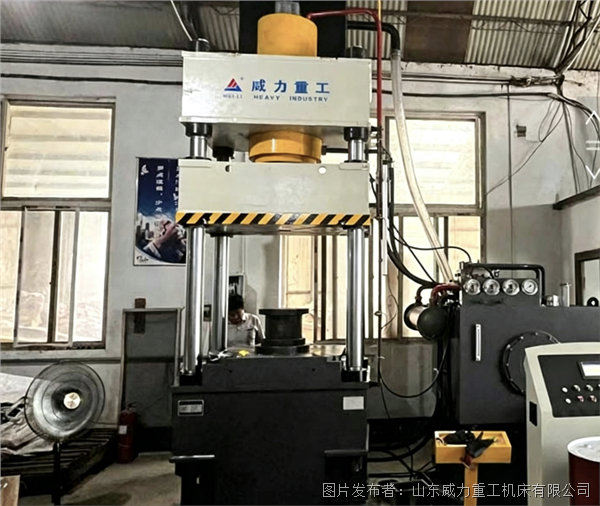
The slider assembly is the core component of the extrusion molding machine. The slider reciprocates vertically via four columns, transmitting pressure from the main hydraulic cylinder during the downward phase, directly contacting the die to apply pressure to the aluminum billet. Aluminum capacitor casings are thin-walled workpieces; during cold extrusion, the metal flows outwards, resulting in uneven stress on different parts of the die. If the slider's guiding precision is insufficient, tilting or deviation during operation will cause uneven stress on the aluminum billet, leading to localized thinning of the casing wall, and in severe cases, tearing and scrapping of the sidewalls. This type of hydraulic equipment uses extended wear-resistant guide sleeves to increase the slider's guiding contact length, coupled with columns treated with tempered hard chrome plating, constraining the slider to descend vertically and smoothly. Even with eccentric loads, it ensures that pressure is applied vertically and evenly to the billet surface. During extrusion, the slider slowly descends, and after the die closes, the set pressure is maintained, allowing the aluminum to gradually undergo plastic flow. The metal material extends along the die cavity contour, gradually forming the basic shape of the cylindrical capacitor casing. The slider's downward speed cannot be too fast, as instantaneous impact pressure will disrupt the flow direction of the aluminum material, causing wrinkles and tearing defects. The equipment relies on a hydraulic circuit to control the slider's feed speed, matching the deformation characteristics of the aluminum material to ensure a stable and controllable forming process.
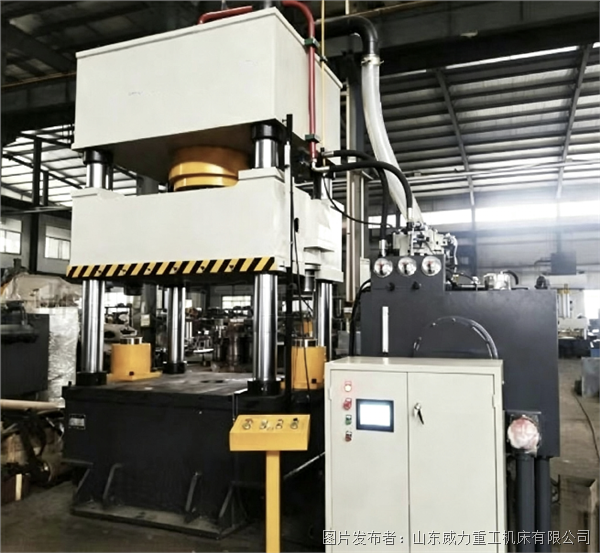
The hydraulic circuit system is the power hub of the entire equipment, determining the pressure magnitude, application speed, and holding time. It is a crucial component in the cold extrusion forming principle. The circuit employs an integrated cartridge valve structure, enabling precise control of the main cylinder pressure output and supporting both constant pressure and constant stroke operating modes. The constant stroke mode controls the slider's downward movement a fixed distance, suitable for mass production with fixed shell depth dimensions. The constant pressure mode maintains a constant pressure output to ensure sufficient plastic deformation of the aluminum material. In the cold extrusion forming of aluminum capacitor shells, the holding pressure process is essential. After the aluminum billet fills the mold cavity, the hydraulic system maintains pressure for a period to release internal stresses generated within the aluminum material, reducing the probability of springback deformation after forming. Insufficient holding time can lead to dimensional shrinkage and barrel deformation after demolding, resulting in dimensional deviations. The integrated hydraulic circuit offers sensitive pressure response and a small pressure fluctuation range, ensuring stable output of the required process pressure even during long periods of continuous production. The external hydraulic station has excellent heat dissipation capabilities, avoiding pressure drift caused by rising oil temperature and ensuring consistent processing conditions for each aluminum shell product during batch processing.
Once the extrusion and pressure holding process is complete, the main hydraulic cylinder drives the slide block to return and lift. At this point, the formed aluminum capacitor shell easily adheres tightly to the inside of the mold cavity. Thin-walled aluminum parts are relatively soft, and manual removal can easily cause deformation due to impact. This step requires a bottom ejection mechanism to demold the workpiece. The ejection cylinder, as an independent power unit, outputs upward thrust to smoothly eject the formed aluminum shell from the mold. The ejection force and stroke can be adjusted according to the shell depth and demolding resistance. The ejection speed must be kept constant, and the impact force must not be too large to prevent the thin-walled aluminum shell from bulging or cracking due to the ejection force. After ejection, the hydraulic cylinder automatically resets, and the equipment enters the next processing cycle. The entire set of actions is uniformly scheduled by the PLC control system. The slide block pressing, pressure holding, slide block return, ejection demolding, and hydraulic cylinder reset processes are linked in an orderly manner, realizing semi-automatic cyclic production of the workpiece.
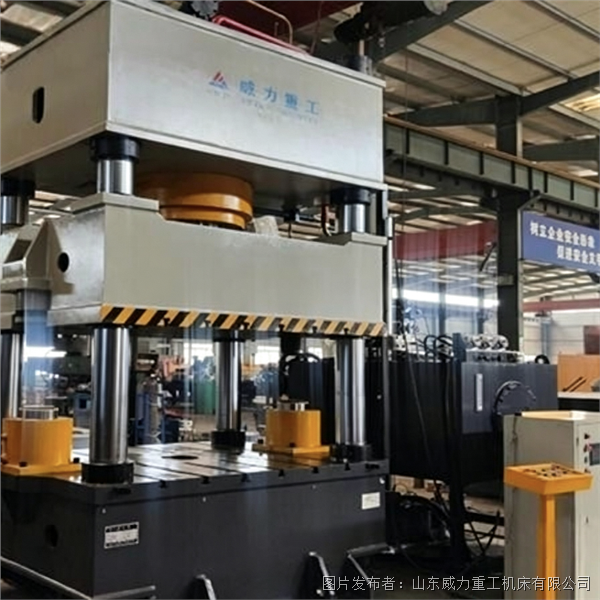
In summary, the cold extrusion forming of aluminum capacitor casings essentially relies on a slider to transmit pressure, a hydraulic circuit to precisely control pressure, speed, and holding time, and an ejector mechanism to demold the finished workpiece. These three elements work together to plastically form the aluminum billet at room temperature. Many processing plants only focus on the nominal pressure of the equipment when purchasing it, neglecting the slider's guiding accuracy, the hydraulic circuit's control performance, and the configuration of the ejector mechanism. This leads to frequent problems during production, such as casing cracking, wall thickness deviations, and demolding damage. Only when the equipment structure matches the requirements of the cold extrusion process can aluminum capacitor casings with dimensional accuracy and perfect appearance be consistently produced, providing qualified components for electronic component manufacturing.
 Implicit Collaboration Capabil
 Changes in device connection m
 LVDT displacement sensor defor
 LVDT Displacement Sensor Mater