
Industrial Agents are not just empty shells of a large model! Siemens' century-long experience is infused into industrial AI.
Honestly, who can work completely without AI these days?
When writing documents, casually ask the AI for help; when creating reports, let it generate them automatically; before following up with clients, let it organize background information. Even tasks like financial reconciliation and sales scripts are handled by AI employees in the background.
To be honest, the batch of AI employees that major internet companies have created in the past six months have already quietly become part of everyone's daily life.
According to statistics from a third-party organization, in June of this year, the number of visits to mainstream desktop AI office intelligent agents alone reached 60 million.
You know what, these agents are really something: they write documents, generate reports, follow up with clients, assist in sales decisions, and can even screen high-potential projects and generate analysis reports for investment institutions...
But if you just put these smart agents directly into a factory workshop, they'll most likely be unable to do anything.
The "2025 Industrial Intelligent Agent Application Status and Trend Outlook Report" (hereinafter referred to as the "Report") surveyed more than 200 manufacturing enterprises, and the results were quite disheartening:
43% of enterprises have not yet deployed industrial intelligent systems, and only 8% have widely adopted them.
It's not that companies don't want to use it—63% are held back by deployment costs, and 46% can't find people who understand both the technology and the production line.
Of course, factory equipment spans generations and protocols vary widely, and there is a long-standing data gap between information technology (IT) and operational technology (OT). Data security must also be independently controllable, which is also a major obstacle.
Ultimately, industrial sites are never isolated problems, but rather a complex system engineering project that spans research and development, engineering, manufacturing, quality, and operation and maintenance.
Single-point optimization cannot solve the overall problem, which is why the threshold for industrial-grade agents is much higher than that for office scenarios.
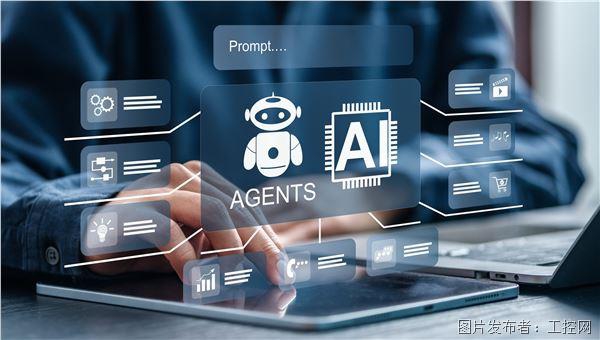
It needs to understand industrial semantics, be able to call industrial tools, access real-time data, and execute within a closed-loop workflow.
In other words, all its capabilities must revolve around the actual operation of the enterprise; it cannot be simply a matter of putting a shell on a large model to fool people.
For companies that urgently need industrial-grade agents, developing solutions behind closed doors is neither realistic nor prohibitively expensive.
As generative AI and intelligent agent technologies accelerate their entry into the industrial sector, Siemens is further connecting its existing industrial software, automation, data, and ecosystem capabilities:
On the one hand, it launched AI-native products such as Eigen Engineering Intelligent Agent, and on the other hand, it brought together products and partners through Siemens Xcelerator to promote the large-scale implementation of industrial AI.
Siemens' self-developed industrial intelligent agents: a leap from assisted suggestions to autonomous execution
The Eigen Engineering Agent, which has been fully launched in the Chinese market, won the "SAIL Star" award at WAIC last month.
It is Siemens' first AI agent designed for industrial automation engineering.
Unlike common AI-assisted tools, Eigen Engineering Agent can independently complete end-to-end task planning, execution, and verification in real engineering systems.
Previously, electrical engineers completed wiring and hardware design using ECAD tools, while automation engineers had to write programs based on a different descriptive system.
Equipment lists, variable labels, and control logic have long relied on repetitive manual input. If the hardware is changed, the software must be re-reconciled, which is time-consuming and prone to errors.
The Eigen Engineering Agent now includes ECAD integration and automatic project generation capabilities.
It can read electrical design files in mainstream formats such as XML and AML, identify data conflicts, configure connections, and generate PLC variable labels based on the actual hardware topology.
Engineers can also use natural language to describe workstations, supporting equipment, and operational logic, generating projects that meet industry standards and can be further developed within minutes.
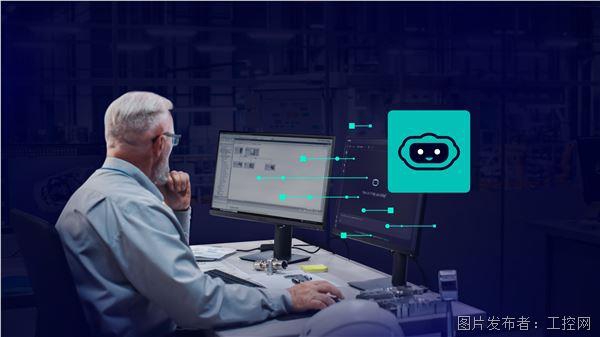
The actual results were also quite solid.
In real-world applications, Eigen's engineering agents improve execution efficiency by 2 to 5 times compared to manual workflows, resulting in an engineering efficiency increase of up to 50% and an overall solution quality improvement of 80%.
Currently, this intelligent agent has been deployed in over 100 companies across 19 countries and regions worldwide.
In China, Eigen's engineered intelligent agents have also been piloted in several companies.
For example, Zhongke Motong uses it in its new energy vehicle EMB intelligent assembly equipment, which reduces program development time and on-site debugging cycle by 30% and reduces labor and material losses by 10%.
Of course, the purpose of developing Eigen engineering agents is not to replace human engineers.
On the contrary, Eigen's engineering agent handles repetitive and tedious tasks such as repetitive coding, drawing analysis, and equipment configuration, freeing engineers to focus on higher-value system decisions and solution innovation.
Eigen Engineering Agent is just one of the many self-developed industrial intelligent agent products in Siemens' portfolio.
Integrating Graph Studio, AI Studio, and the Mendix low-code platform, Siemens also released Intelligence Center X (ICX) industrial AI orchestration software.
It is not a large model, but an AI orchestration layer that sits on top of the enterprise's existing systems—connecting downwards to PLM , ERP , MES, CRM and OT field data, unifying the management of models, agents and workflows upwards, and tracking every data access and agent decision.
Simply put, ICX is an "AI dispatch center" that Siemens installs in factories.
It does not replace the factory's existing systems, but sits on top of them, organizing data, knowledge, models, and intelligent agents, enabling AI to move from "being able to chat" to "being able to do work," and making it manageable and traceable, ultimately saving time, money, and improving efficiency in the factory.
As a new development in Siemens' intelligent agent capability system, ICX provides modules such as enterprise-level knowledge graph construction, data analysis and machine learning model construction, skill building, agent construction and debugging, and orchestration capabilities for multi-step tasks, supporting enterprises to develop, debug and test AI agents in the cloud.
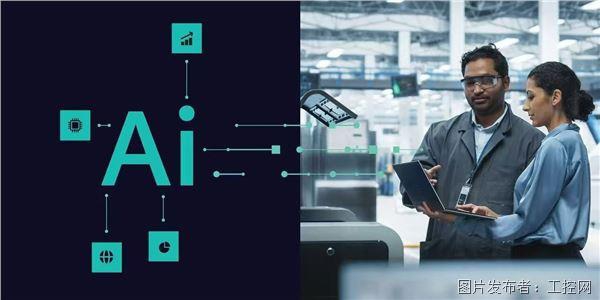
These facts prove that industrial AI can indeed get things done, but industrial scenarios are not like internet applications; they do not have relatively standardized requirements.
A car factory, a semiconductor factory, and a data center each face completely different production processes and equipment systems.
Even within the same factory, the needs for research and development, production, quality, and operation and maintenance can vary greatly.
The real challenge of industrial AI is not to create an omnipotent super agent, but to adapt the capabilities of mature intelligent agents to the automation needs of different industries and fields.
Industrial AI needs more than just agents
Siemens did not stop at individual smart agent products, but modularized its industrial capabilities accumulated over many years to create the open digital business platform "Siemens Xcelerator".
Traditional digital platforms often follow a shelf logic: the buying and selling relationship ends the moment the transaction is completed.
Siemens Xcelerator aims to act as a "Launchpad for Industrial AI":
Through its product portfolio and partner ecosystem, it connects the software, automation, data, and industry knowledge required for industrial AI, helping customers identify scenarios, match solutions, and move from product acquisition to deployment and value realization.
On this platform, Siemens has achieved a closed loop of industrial AI capabilities through a clear three-layer architecture.
First layer: Product portfolio
The current situation is that the biggest obstacle faced by many manufacturing companies is not that they do not know the value of AI, but that they do not have the ability to develop it from scratch.
Siemens Xcelerator is the first to offer industrial AI solutions that can be implemented directly.
For example, Eigen Engineering Agent, a product validated by real engineering projects, can be directly embedded into engineering and production processes, allowing companies to get started.
All of its self-developed agents are placed on the Siemens Xcelerator platform, allowing companies that need them to "use them out of the box".
Second layer: Ecosystem development
If you don't want to use an existing product and prefer to create your own agent, that's easy to do too.
Siemens Xcelerator provides developers and ecosystem partners with an industrial intelligent agent development kit.
This suite provides core components such as Skill Creator, Agent Framework, and Workflow, enabling enterprise users to develop, debug, and test AI agents in the cloud.
This includes: AI knowledge retrieval and question-answering services based on RAG (Retrieval Enhanced Generation) technology, and Skill and workflow generation services based on Skill-Creator and Workflow tools, helping enterprises to agent their software and internal capabilities.
The most crucial aspect is encapsulating the engineering know-how of the OT layer, such as PLC, industrial edge computing, data acquisition, and anomaly analysis, into skills that agents can understand, see, and directly invoke.
This action is essentially "fitting" industrial experience into a framework, which is also Siemens' unique advantage.
While entry points may change, the underlying knowledge and processes can become long-term assets for a company.
The Siemens Energy Carbon Management Intelligent Agent (ECX Agent) was developed using these development kits.
It provides human-computer collaborative interaction based on natural language, and under user management, it can autonomously complete professional business tasks such as lean energy management, intelligent equipment operation and maintenance, and carbon data MRV (monitoring, reporting, and verification).
It achieves intelligent workflow for energy and carbon management through the Siemens Xcelerator intelligent agent application development framework and a professional underlying large model engine.
Then, by calling the API of Siemens' Smart-ECX platform for energy and carbon business software through the tool interface, real-time data on energy consumption and carbon emissions can be read to realize carbon inventory, energy and carbon audit, energy and carbon Q&A, and output emission reduction plans.
In addition to their internally developed cases, Beijing Zhidian Interactive and Shanghai Quanxiao Information Technology have both used Siemens' development kits to configure industrial AI agents that suit their needs.
Pivot Interactive reuses the Siemens Xcelerator Industrial Intelligent Agent Development Kit via API, leveraging AI knowledge base capabilities to complete document parsing and vector retrieval.
Then, using a self-developed platform, we completed Agent orchestration, business processes, human-machine approval closed loop, and end-to-end governance, and encapsulated the retrieved industrial know-how into reusable Skill digital workforce assets.
Quanxiao Information Technology uses the Siemens Xcelerator Industrial Intelligent Agent Development Kit to carry out the entire process, directly reusing native capabilities such as knowledge base, skill generation, and agent orchestration.
The company focuses on secondary development by overlaying industry business rules onto specific scenarios in the manufacturing industry, and delivers industry-specific industrial intelligent agent application solutions, such as automotive OBD testing agents and equipment maintenance agents.
Third floor: Commercial entrance
An agent was tested in the lab, but it only completed the initial steps.
Once an intelligent agent is developed, the core challenge for its commercialization is finding buyers and scaling up its replication.
Customers can find filtered industrial AI capabilities more quickly on Siemens Xcelerator's online platform, Marketplace.
Ecosystem partners can also showcase products, reach industrial customers, obtain feedback, and continuously iterate.
This also demonstrates Siemens' sincerity; even if third-party self-developed agent manufacturers join, the Siemens Xcelerator platform is open to accept them into its ecosystem.

AI innovation companies can apply to join the Siemens Xcelerator ecosystem. Once approved, they can join the platform as resident companies, provide differentiated industry solutions, and complete project delivery to customers.
For example, AQ Technology does not need to reconstruct its own technology stack. Instead, it connects its self-developed AQ-VLM industrial vision large model and VisionAgent vision application platform to Siemens X Data Hub data base and Teamcenter PLM system through standard APIs.
Siemens provides industrial data context and business process entry points, while Achiu Technology delivers its core, system-verified visual defect detection capabilities.
The "Multi-Dimensional Industrial AI Vision Intelligent Base" jointly developed by the two parties has been put on the Marketplace after completing interoperability testing and security compliance audits, providing "out-of-the-box" intelligent quality inspection capabilities to more manufacturing enterprises.
In addition, Siemens Xcelerator ecosystem partner, SET Technology, has developed an AI-powered automatic drawing platform that can quickly convert 3D models into 2D engineering drawings, helping companies deliver quickly.
A more intuitive result is that automotive equipment/non-standard automation equipment companies have found Shexu Technology's solutions on the Marketplace. After using them, the average drawing output efficiency per person has been reduced from several days to hours, and a team of 10 people can save more than 7,000 hours of work per year.
Currently, the Siemens Xcelerator platform covers industries such as automotive, food and beverage, electronic semiconductors, data centers, and green building.
During WAIC 2026, nine more AI partners signed ecosystem cooperation agreements with Siemens Xcelerator to further expand their applications in physical AI, embodied intelligence, industrial intelligent agents, and computing power scenarios.
As of July 2026, Siemens Xcelerator has gathered more than 900 digital and low-carbon products and solutions, over 600,000 registered users, and more than 600 ecosystem partners, including more than 100 partners who have launched AI industry applications.
Its emergence is not to provide the industry with a standardized answer, but to establish a huge self-evolving system that can continuously generate new answers based on on-site needs through Marketplace, optimized business portfolio and open ecosystem.
How Siemens Xcelerator can replicate success in more factories
Zooming out, what truly determines the value of Siemens Xcelerator is not how many products are on the platform or how many partners are gathered there, but whether these resources can be effectively utilized.
The scaling up of industrial AI is not about copying and pasting the same agent into a hundred factories, but about making each successful delivery the starting point for the next implementation.
Eigen's self-developed products, such as engineering intelligent agents, were first prototyped in real engineering systems to prove that industrial agents can not only understand tasks and generate solutions, but also enter PLC, HMI and automation engineering processes to complete end-to-end execution and deliver quantifiable ROI on the production line.
Behind this lies Siemens' industrial foundation.
The engineering knowledge accumulated in TIA Portal, PLCs, and industrial edge computing determines whether the Agent can understand industrial semantics, access real devices, and operate stably under permission, audit, and rollback mechanisms.
They are like a universal chassis for industrial AI, solving fundamental engineering problems that every developer has to deal with.
With this platform, ecosystem partners won't have to reinvent the wheel.
Developers in industries such as automotive, semiconductor, energy, and food and beverage can build upon proven capabilities and add their industry know-how to develop agents for different equipment, processes, and business operations.
The same industrial base can be used to develop hundreds of different application scenarios.
These applications then reach even more customers through Siemens Xcelerator's Marketplace portal

If you succeed once, you don't have to start from scratch the next time.
The more partners that join, the more diverse the scenarios covered, and the more industrial knowledge the platform accumulates, the easier it is to develop and deploy new agents.
This is also the most fundamental difference between Siemens Xcelerator and ordinary software shelving.
Shelves solve the problem of "selling products," while Siemens Xcelerator aims to solve the problem of "allowing products to continue to grow in real industrial scenarios."
Manufacturing companies are also voting for this path by making their choices.
The report shows that 68% of companies are willing to share data and integrate technology with external technology vendors.
Siemens is further opening up its Chinese factory scenarios and attracting developers to industrial AI through the Siemens Xcelerator open competition, turning real needs directly into a testing ground for ecosystem innovation.
Therefore, Siemens Xcelerator replicates a set of methods: "verify, preserve, develop, distribute, and re-verify".
When an agent can write PLC code, this is called single-point intelligence.
But when different partners can create their own agents in different processes, accumulate their own know-how, create their own ROI, and then bring that success to more factories, the large-scale implementation of industrial AI can truly begin.
Ultimately, the widespread adoption of AI in the office relies on enabling everyone to open a chat window.
The popularization of industrial AI relies on transforming the capabilities validated in one factory into productivity that can be safely utilized by more factories.
This is what Siemens Xcelerator is pushing for.
When Agents are no longer just star projects in demonstration factories, but become a basic capability that engineers can use at any time, like PLCs and industrial software, then industrial AI will have truly stepped out of the exhibition booth and into the production line.
 Implicit Collaboration Capabil
 Changes in device connection m
 LVDT displacement sensor defor
 LVDT Displacement Sensor Mater